
Content report card
Ender's Game parent’s guide: what’s inside
Sexual content
LGBTQ+ themes
Substance use
What it offers
A note for parents
Ender's Game is a celebrated military science fiction novel exploring themes of child exploitation, war strategy, and moral consequences through the story of a brilliant child soldier. While the violence is not graphically depicted, the psychological weight is significant—children are manipulated into combat, and the ending carries heavy emotional and ethical implications. The book rewards critical thinking about authority and the cost of victory, making it suitable for mature teens but potentially disturbing for younger readers.
Analyzed by AI · 1 month ago
Read it with your kids?
Rate it and suggest an age to help other parents.
From the publisher
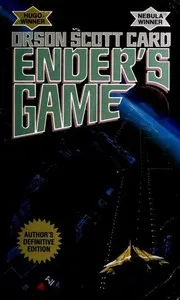
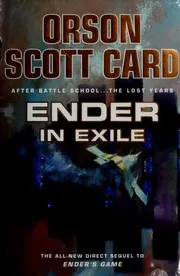
Ender's Game is a 1985 military science fiction novel by American author Orson Scott Card. Set at an unspecified date in Earth's future, the novel presents an imperiled humankind after two conflicts with the Formics, an insectoid alien species they dub the "buggers". In preparation for an anticipated third invasion, ch... Ender's Game is a 1985 military science fiction novel by American author Orson Scott Card. Set at an unspecified date in Earth's future, the novel presents an imperiled humankind after two conflicts with the Formics, an insectoid alien species they dub the "buggers". In preparation for an anticipated third invasion, children, including the novel's protagonist, Andrew "Ender" Wiggin, are trained from a very young age by putting them through increasingly difficult games, including some in zero gravity, where Ender's tactical genius is revealed. The book originated as a short story of the same name, published in the August 1977 issue of Analog Science Fiction and Fact. The novel was published on January 15, 1985. Later, by elaborating on characters and plotlines depicted in the novel, Card was able to write additional books in the Ender's Game series. Card also released an updated version of Ender's Game in 1991, changing some political facts to reflect the times more accurately (e.g., to include the recent collapse of the Soviet Union and the end of the Cold War). The novel has been translated into 34 languages. Reception of the book has been mostly positive. It has become suggested reading for many military organizations, including the United States Marine Corps. Ender's Game was recognized as "best novel" by the 1985 Nebula Award\[3\] and the 1986 Hugo Award\[4\] in the genres of science fiction and fantasy. Its four sequels—Speaker for the Dead (1986), Xenocide (1991), Children of the Mind (1996), and Ender in Exile (2008)—follow Ender's subsequent travels to many different worlds in the galaxy. In addition, the later novella A War of Gifts (2007) and novel Ender's Shadow (1999), plus other novels in the Shadow saga, take place during the same time period as the original. --- Contained in: Ender's War See also: - Ender's Game: 1/2
Shelved under
- New York Times bestseller
- nyt:mass_market_paperback=2011-07-30
- military education
- end of the world
- prize:nebula
- hegemony
- space warfare
- child soldiers
- The Ender Quintet
- science fiction
- automation
- data processing
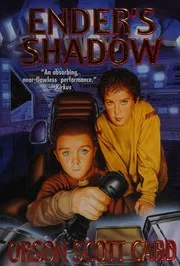
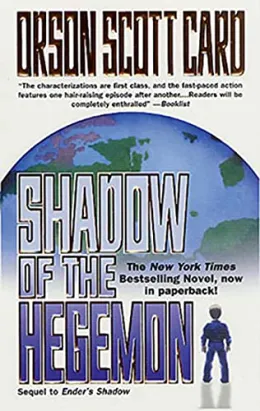
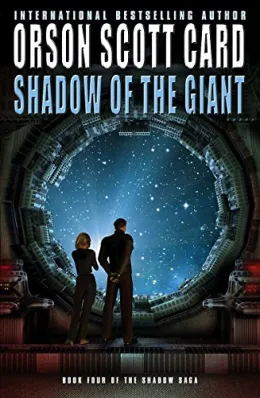
Books in the Enderverse: Publication Order series
Full series in order →
Share this guide
ISBN 9780812550702 · TOR