
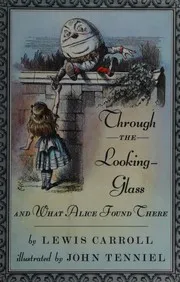
Through the Looking-Glass
Catherine Miles, John Tenniel, Lewis Carroll
Readers rate it 3.9 (368 on Hardcover)
208 pages · Released 2016 · Scholastic
Content report card
Through the Looking-Glass parent’s guide: what’s inside
Language
Sexual content
LGBTQ+ themes
Substance use
What it offers
A note for parents
Through the Looking-Glass is a classic Victorian children's fantasy that uses wordplay, logic puzzles, and imaginative scenes to delight young readers. The content is almost entirely nonsensical and whimsical, with minimal violence or scary elements—mostly abstract or cartoonish. The book rewards curiosity, courage, and persistence while introducing children to poetic language, chess concepts, and clever wordplay that can stretch their thinking.
Analyzed by AI · 1 month ago
Read it with your kids?
Rate it and suggest an age to help other parents.
From the publisher
Through the Looking-Glass, and What Alice Found There (1871) is a work of children's literature by Lewis Carroll (Charles Lutwidge Dodgson), generally categorized in the fairy tale genre. It is the sequel to Alice's Adventures in Wonderland (1865). Although it makes no reference to the events in the earlier book, the t... Through the Looking-Glass, and What Alice Found There (1871) is a work of children's literature by Lewis Carroll (Charles Lutwidge Dodgson), generally categorized in the fairy tale genre. It is the sequel to Alice's Adventures in Wonderland (1865). Although it makes no reference to the events in the earlier book, the themes and settings of Through the Looking-Glass make it a kind of mirror image of Wonderland: the first book begins outdoors, in the warm month of May, uses frequent changes in size as a plot device, and draws on the imagery of playing cards; the second opens indoors on a snowy, wintry night exactly six months later, on November 4 (the day before Guy Fawkes Night), uses frequent changes in time and spatial directions as a plot device, and draws on the imagery of chess. In it, there are many mirror themes, including opposites, time running backwards, and so on. ([Wikipedia][1]) [1]: http://en.wikipedia.org/wiki/Through_the_Looking-Glass
Shelved under
- Fantasy
- Fiction
- English Nonsense verses
- Children's poetry, English
- Nonsense verses
- English poetry
- Alice (Fictitious character : Carroll)
- Toy and movable books
- English Fantasy poetry
- Children's stories
- Juvenile literature
- Specimens
Books in the Alice's Adventures in Wonderland series
Full series in order →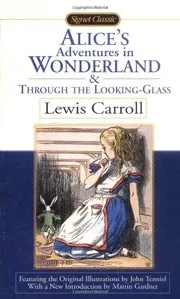
Share this guide
ISBN 9780688120498 · Scholastic