
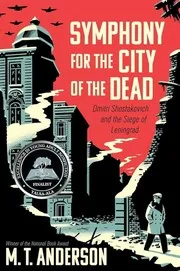
Symphony for the city of the dead
Dmitri Shostakovich and the Siege of Leningrad
Readers rate it 4.4 (17 on Hardcover)
456 pages · Released 2015 · Candlewick Press
Content report card
Symphony for the city of the dead parent’s guide: what’s inside
Sexual content
LGBTQ+ themes
Substance use
What it offers
A note for parents
This National Book Award–winning nonfiction account of the Siege of Leningrad presents a historically accurate but unflinching portrait of war's human cost, including starvation, death, and survival cannibalism. While the subject matter is inherently dark and mature, Anderson frames the narrative around Shostakovich's artistic resilience and the power of music to sustain hope, making it valuable for older teens seeking to understand WWII history and human courage. The book is well-researched, beautifully written, and appropriate for engaged middle schoolers (age 12+) and high schoolers, though younger readers should have some emotional maturity and parental context.
Analyzed by AI · 1 month ago
Read it with your kids?
Rate it and suggest an age to help other parents.
From the publisher
National Book Award winner M. T. Anderson delivers a brilliant and riveting account of the Siege of Leningrad and the role played by Russian composer Shostakovich and his Leningrad Symphony. In September 1941, Adolf Hitler s Wehrmacht surrounded Leningrad in what was to become one of the longest and most destructive si... National Book Award winner M. T. Anderson delivers a brilliant and riveting account of the Siege of Leningrad and the role played by Russian composer Shostakovich and his Leningrad Symphony. In September 1941, Adolf Hitler s Wehrmacht surrounded Leningrad in what was to become one of the longest and most destructive sieges in Western history almost three years of bombardment and starvation that culminated in the harsh winter of 1943 1944. More than a million citizens perished. Survivors recall corpses littering the frozen streets, their relatives having neither the means nor the strength to bury them. Residents burned books, furniture, and floorboards to keep warm; they ate family pets and eventually one another to stay alive. Trapped between the Nazi invading force and the Soviet government itself was composer Dmitri Shostakovich, who would write a symphony that roused, rallied, eulogized, and commemorated his fellow citizens the Leningrad Symphony, which came to occupy a surprising place of prominence in the eventual Allied victory.
Shelved under
- Composers
- Juvenile literature
- World War, 1939-1945
- History
- New York Times reviewed
- Composers, juvenile literature
- World war, 1939-1945, juvenile literature
- Saint petersburg (russia), history, siege, 1941-1944
- Biography
- Music and the war
- Music
- Morale
Share this guide
ISBN 9780763668181 · Candlewick Press