
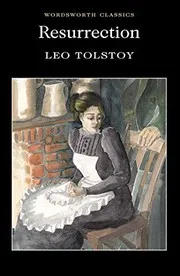
Resurrection
Readers rate it 4.1 (35 on Hardcover)
496 pages · Released Jul 14, 2014 · Wordsworth Editions Ltd
Content report card
Resurrection parent’s guide: what’s inside
LGBTQ+ themes
What it offers
A note for parents
Tolstoy's *Resurrection* is a serious 19th-century Russian novel exploring redemption, social injustice, and spiritual awakening through the story of a man confronting harm he caused to a woman now trapped in poverty and prostitution. While the novel's core message—that we must acknowledge and repair harm, and that society's treatment of the poor is unjust—is deeply moral, the subject matter involves sexual coercion, prostitution, trials for serious crimes, and unflinching depictions of poverty and state cruelty. This is adult literature adapted for mature teen readers interested in classics, social history, and philosophical fiction, not a young teen adventure.
Analyzed by AI · 1 month ago
Read it with your kids?
Rate it and suggest an age to help other parents.
From the publisher
Resurrection, the last full-length novel written by Leo Tolstoy, was published in 1899 after ten years in the making. A humanitarian cause—the pacifist Doukhobor sect, persecuted by the Russian government, needed funds to emigrate to Canada—prompted Tolstoy to finish the novel and dedicate its ensuing revenues to allev... Resurrection, the last full-length novel written by Leo Tolstoy, was published in 1899 after ten years in the making. A humanitarian cause—the pacifist Doukhobor sect, persecuted by the Russian government, needed funds to emigrate to Canada—prompted Tolstoy to finish the novel and dedicate its ensuing revenues to alleviate their plight. Ultimately, Tolstoy’s actions were credited with helping hundreds of Doukhobors emigrate to Canada. The novel centers on the relationship between Nekhlúdoff, a Russian landlord, and Máslova, a prostitute whose life took a turn for the worse after Nekhlúdoff wronged her ten years prior to the novel’s events. After Nekhlúdoff happens to sit in the jury for a trial in which Máslova is accused of poisoning a merchant, Nekhlúdoff begins to understand the harm he has inflicted upon Máslova—and the harm that the Russian state and society inflicts upon the poor and marginalized—as he embarks on a quest to alleviate Máslova’s suffering. Nekhlúdoff’s process of spiritual awakening in Resurrection serves as a framing for many of the novel’s religious and political themes, such as the hypocrisy of State Christianity and the injustice of the penal system, which were also the subject of Tolstoy’s nonfiction treatise on Christian anarchism, The Kingdom of God Is Within You. The novel also explores the “single tax” economic theory propounded by the American economist Henry George, which drives a major subplot in the novel concerning the management of Nekhlúdoff’s estates.
Shelved under
- Continental european fiction (fictional works by one author)
- Fiction, general
- Fiction, historical, general
- Russia (federation), fiction
- Atonement -- Fiction
- Russia -- Social conditions -- 1801-1917 -- Fiction
- Aristocracy (Social class) -- Russia -- Fiction
- Prostitutes -- Russia -- Fiction
- Trials (Murder) -- Russia -- Fiction
- Change -- Religious aspects -- Fiction
- Social justice -- Russia -- Fiction
- Fiction
Share this guide
ISBN 9781840227284 · Wordsworth Editions Ltd