
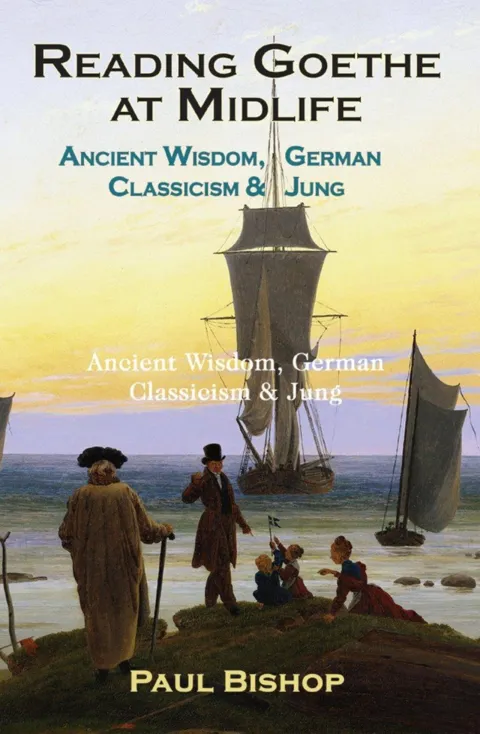
Reading Goethe at Midlife
Ancient Wisdom, German Classicism, and Jung
438 pages · Released Jul 13, 2020 · Chiron Publications
Content report card
Reading Goethe at Midlife parent’s guide: what’s inside
Violence
Language
Sexual content
LGBTQ+ themes
Scary or mature
Substance use
What it offers
Positive messages
Positive role models
Educational value
A note for parents
This is a scholarly academic work on depth psychology, Jungian theory, and German literature—not a book written for or typically read by children. It is a specialized text for adults interested in psychology, literary analysis, and intellectual history. No content warnings apply, but this is simply not a children's book.
Analyzed by AI · 1 month ago
Read it with your kids?
Rate it and suggest an age to help other parents.
From the publisher
This book explores the history of the idea of the midlife crisis, using the writings of C.G. Jung and Goethe to investigate its relevance for today. Tracing how “the ages of humankind” became “the stages of life” in which the midlife crisis represents a pivotal moment, Paul Bishop offers a detailed analysis of a paper... This book explores the history of the idea of the midlife crisis, using the writings of C.G. Jung and Goethe to investigate its relevance for today. Tracing how “the ages of humankind” became “the stages of life” in which the midlife crisis represents a pivotal moment, Paul Bishop offers a detailed analysis of a paper by Jung on this subject. He then shifts the focus to Goethe’s interest in Orphic wisdom, and one of Goethe’s major later poems, “Primal Words. Orphic” (Urworte Orphisch). Using Jungian ideas to explore the psychological implications of this poem, Bishop draws on Goethe’s own commentary, and other background material, to uncover its vital message. Reading Goethe at Midlife reveals the remarkable symmetry between the ideas and Jung and Goethe. Jung’s analysis of the stages of life, and his advice to heed the “call of the self,” are brought into the conjunction with Goethe’s emphasis on the importance of hope, showing an underlying continuity of thought and relevance from ancient wisdom, via German classicism to analytical psychology. At a time when many Jungians are turning to neuroscience to provide an external underpinning for Analytical Psychology, this scholarly book is very welcome: it returns to psychology’s home territory, placing Jung firmly in a long cultural tradition. Impressively well-read in many fields extending from literature and the history of ideas to psychoanalysis and Jungian studies, Paul Bishop allows a text by Jung and a late poem by Goethe to mirror and enhance each other, demonstrating Jung's intellectual proximity to the tradition of German classicism. The wealth of “amplifications” that Bishop brings to the many themes treated allows us to experience a living reality—a continuity of ideas across different times and cultures.
Shelved under
- Psychology
Share this guide
ISBN 9781630518608 · Chiron Publications