
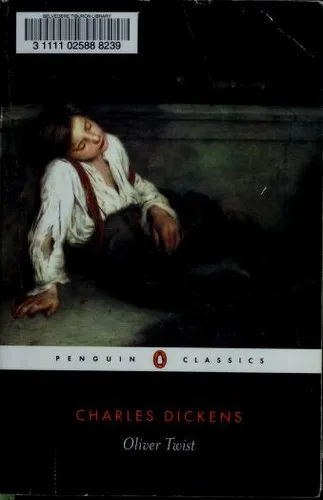
Oliver Twist
Vincent Buranelli, Hieronimus Fromm, Charles Dickens
Readers rate it 3.7 (543 on Hardcover)
608 pages · Released Sep 3, 2026 · Penguin Books
Content report card
Oliver Twist parent’s guide: what’s inside
Sexual content
LGBTQ+ themes
What it offers
Educational value
A note for parents
This classic 19th-century novel follows a orphan boy navigating hardship in Victorian England with themes of resilience, kindness, and justice. While it contains some violence and depicts child abuse and poverty unflinchingly, the tone is ultimately hopeful and moral. The language and mature themes are period-appropriate for middle-grade readers and up, particularly those mature for their age or familiar with classics.
Analyzed by AI · 1 month ago
Read it with your kids?
Rate it and suggest an age to help other parents.
From the publisher
Oliver Twist; or, The Parish Boy's Progress, is the second novel by English author Charles Dickens. It was originally published as a serial from 1837 to 1839, and as a three-volume book in 1838. The story follows the titular orphan, who, after being raised in a workhouse, escapes to London, where he meets a gang of juv... Oliver Twist; or, The Parish Boy's Progress, is the second novel by English author Charles Dickens. It was originally published as a serial from 1837 to 1839, and as a three-volume book in 1838. The story follows the titular orphan, who, after being raised in a workhouse, escapes to London, where he meets a gang of juvenile pickpockets led by the elderly criminal Fagin, discovers the secrets of his parentage, and reconnects with his remaining family. Oliver Twist unromantically portrays the sordid lives of criminals, and exposes the cruel treatment of the many orphans in London in the mid-19th century.[2] The alternative title, The Parish Boy's Progress, alludes to Bunyan's The Pilgrim's Progress, as well as the 18th-century caricature series by painter William Hogarth, A Rake's Progress and A Harlot's Progress. In an early example of the social novel, Dickens satirises child labour, domestic violence, the recruitment of children as criminals, and the presence of street children. The novel may have been inspired by the story of Robert Blincoe, an orphan whose account of working as a child labourer in a cotton mill was widely read in the 1830s. It is likely that Dickens's own experiences as a youth contributed as well, considering he spent two years of his life in the workhouse at the age of 12 and subsequently, missed out on some of his education.
Shelved under
- Classics
- Juvenile Fiction
- Bildungsromans
- Boys
- Brigands and robbers
- British and irish fiction (fictional works by one author)
- British fiction
- Children
- Children's fiction
- Children's stories
- Classic
- Coming of age
Share this guide
ISBN 9780141439747 · Penguin Books