
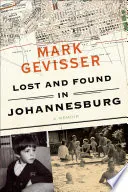
Lost and Found in Johannesburg
A Memoir
339 pages · Released Apr 15, 2014 · Macmillan + ORM
Content report card
What's inside
Substance use
What it offers
Educational value
A note for parents
This is an adult memoir about apartheid-era South Africa and the author's personal history, not a children's book. While not graphically violent, it contains mature themes including an armed home invasion, discussions of racism and segregation, references to gay relationships and intimacy, and complex historical trauma. The writing is sophisticated and introspective, suitable for older teens and adults interested in history and memoir.
Analyzed by AI · 1 day ago
Read it with your kids?
Rate it and suggest an age to help other parents.
From the publisher
An intimate map of the South African city during and after apartheid: "Illuminating, unsettling, engrossing, often funny, and, in a word, brilliant." —Claire Messud, New York Times–bestselling author of This Strange Eventful History Lost and Found in Johannesburg begins with a transgression—the armed invasion of a priv... An intimate map of the South African city during and after apartheid: "Illuminating, unsettling, engrossing, often funny, and, in a word, brilliant." —Claire Messud, New York Times–bestselling author of This Strange Eventful History Lost and Found in Johannesburg begins with a transgression—the armed invasion of a private home in the city of Mark Gevisser's birth. But far more than a harrowing account of a break-in, this is a daring exploration of place and the boundaries upon which identities are mapped. As a white child in apartheid South Africa, Gevisser becomes obsessed with a street guide called Holmden's Register of Johannesburg, which literally erases entire black townships. Johannesburg, he realizes, is full of divisions between black and white, rich and poor, gay and straight. In this book, he embarks on a quest to understand the inner life of his city, using maps, family photographs, shards of memory, newspaper clippings, and courtroom testimony to chart his intimate history of Johannesburg. He traces his family's journey from a Lithuanian shtetl to the white suburban neighborhoods where separate servants' quarters were legally required at every house. Gevisser, who eventually marries a black man, tells stories of others who've learned to define themselves within, across, and against the city's boundaries. He recalls the double lives of gay men like Phil and Edgar, the ever-present housekeepers and gardeners, and the private swimming pools where blacks and whites could be discreetly intimate. And he explores physical barriers like The Wilds, a large park dividing Johannesburg's affluent Northern Suburbs from two of its poorest neighborhoods. It is this park that the three men who held Gevisser at gunpoint crossed the night of their crime. An ode to both the marked and unmarked landscape of one man's past, Lost and Found in Johannesburg is an existential guide to one of the most complex cities on earth. "[Gevisser] is unflinching in his account of the complex contradictions that still haunt his country." — The New Yorker "Outstanding . . . Mark Gevisser does for Johannesburg what Orhan Pamuk did for Istanbul . . . as intimate and sophisticated a guide as one would wish for to this great, troubled metropolis." —Teju Cole, PEN/Hemingway Award–winning author of Open City "Brilliantly maps out multiple worlds fractured by race, class, and history . . . as complex and beautiful as any memoir I've ever read." —Dinaw Mengestu, author of Someone Like Us "An often-moving account of the ways we navigate our emotional and geographical landscapes." — Kirkus Reviews
Shelved under
- History
- South African Authors
- Biography
- Authors, south african
- Johannesburg (south africa)
- South africa, biography
- BIOGRAPHY & AUTOBIOGRAPHY / Personal Memoirs
- HISTORY / Africa / South / Republic of South Africa
- BIOGRAPHY & AUTOBIOGRAPHY / Cultural Heritage
Share this guide
ISBN 9781429947749 · Macmillan + ORM