
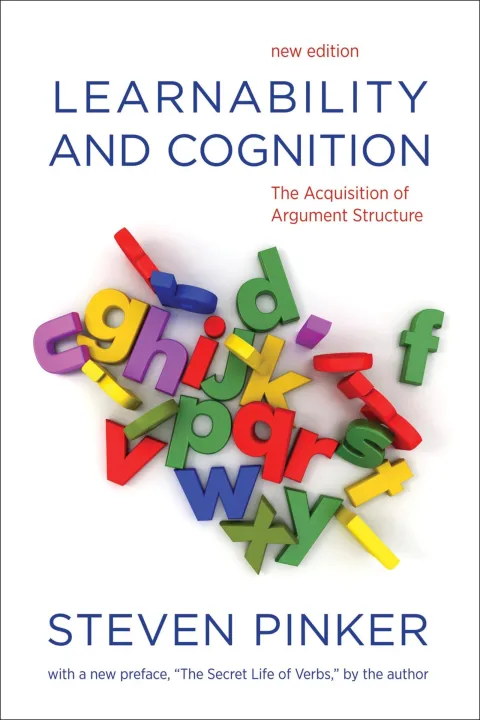
Learnability and Cognition, new edition
The Acquisition of Argument Structure
509 pages · Released May 24, 2013 · MIT Press
Content report card
Learnability and Cognition, new edition parent’s guide: what’s inside
Violence
Language
Sexual content
LGBTQ+ themes
Scary or mature
Substance use
What it offers
Positive messages
Positive role models
A note for parents
This is a technical academic monograph on cognitive science and linguistics, not a children's or young adult book. It explores how children acquire language and how the mind represents concepts like causality and agency through the lens of verb learning. The content is scholarly and theoretical, appropriate for upper-level undergraduate or graduate students in linguistics, psychology, or cognitive science, not for general youth reading.
Analyzed by AI · 1 month ago
Read it with your kids?
Rate it and suggest an age to help other parents.
From the publisher
A classic book about language acquisition and conceptual structure, with a new preface by the author, "The Secret Life of Verbs." Before Steven Pinker wrote bestsellers on language and human nature, he wrote several technical monographs on language acquisition that have become classics in cognitive science. Learnabilit... A classic book about language acquisition and conceptual structure, with a new preface by the author, "The Secret Life of Verbs." Before Steven Pinker wrote bestsellers on language and human nature, he wrote several technical monographs on language acquisition that have become classics in cognitive science. Learnability and Cognition, first published in 1989, brought together two big topics: how do children learn their mother tongue, and how does the mind represent basic categories of meaning such as space, time, causality, agency, and goals? The stage for this synthesis was set by the fact that when children learn a language, they come to make surprisingly subtle distinctions: pour water into the glass and fill the glass with water sound natural, but pour the glass with water and fill water into the glass sound odd. How can this happen, given that children are not reliably corrected for uttering odd sentences, and they don't just parrot back the correct ones they hear from their parents? Pinker resolves this paradox with a theory of how children acquire the meaning and uses of verbs, and explores that theory's implications for language, thought, and the relationship between them. As Pinker writes in a new preface, "The Secret Life of Verbs," the phenomena and ideas he explored in this book inspired his 2007 bestseller The Stuff of Thought: Language as a Window into Human Nature. These technical discussions, he notes, provide insight not just into language acquisition but into literary metaphor, scientific understanding, political discourse, and even the conceptions of sexuality that go into obscenity.
Shelved under
- Psychology
Share this guide
ISBN 9780262314282 · MIT Press