
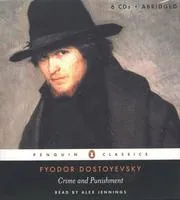
Crime and Punishment (Penguin Classics)
Leonard Stanton, James D. Hardy Jr., Sidney Monas, Robin Feuer Miller, Fyodor Dostoevsky
Readers rate it 4.3 (2.1K on Hardcover)
1 pages · Released Jun 16, 2005 · Penguin Audio
Content report card
Crime and Punishment (Penguin Classics) parent’s guide: what’s inside
LGBTQ+ themes
What it offers
A note for parents
Crime and Punishment is a profound psychological novel exploring moral philosophy, guilt, and redemption through the protagonist's descent into and recovery from committing murder. While the violence itself is not graphically depicted, the novel's intense focus on psychological torment, existential dread, and moral philosophy makes it best suited for mature teen readers capable of engaging with complex ethical questions. This is a foundational work of literature with significant educational value, though its density and dark themes require a reader prepared for introspection and moral ambiguity.
Analyzed by AI · 1 month ago
Read it with your kids?
Rate it and suggest an age to help other parents.
From the publisher
From wikipedia: Crime and Punishment (Russian: Преступлéние и наказáние, tr. Prestupleniye i nakazaniye; IPA: \[prʲɪstʊˈplʲenʲə ɪ nəkɐˈzanʲə\]) is a novel by the Russian author Fyodor Dostoyevsky. It was first published in the literary journal The Russian Messenger in twelve monthly installments during 1866.1 It was... From wikipedia: Crime and Punishment (Russian: Преступлéние и наказáние, tr. Prestupleniye i nakazaniye; IPA: \[prʲɪstʊˈplʲenʲə ɪ nəkɐˈzanʲə\]) is a novel by the Russian author Fyodor Dostoyevsky. It was first published in the literary journal The Russian Messenger in twelve monthly installments during 1866.1 It was later published in a single volume. It is the second of Dostoyevsky's full-length novels following his return from ten years of exile in Siberia. Crime and Punishment is considered the first great novel of his "mature" period of writing.\[2\] Crime and Punishment focuses on the mental anguish and moral dilemmas of Rodion Raskolnikov, an impoverished ex-student in St. Petersburg who formulates and executes a plan to kill an unscrupulous pawnbroker for her cash. Raskolnikov argues that with the pawnbroker's money he can perform good deeds to counterbalance the crime, while ridding the world of a worthless vermin. He also commits this murder to test his own hypothesis that some people are naturally capable of such things, and even have the right to do them. Several times throughout the novel, Raskolnikov justifies his actions by comparing himself with Napoleon Bonaparte, believing that murder is permissible in pursuit of a higher purpose. --- See also: - Преступлéние и наказáние: 1/2
Shelved under
- English Translations
- Russian literature
- Novela psicológica
- Fiction
- Translations into Yiddish
- Psychological fiction
- German language
- Murder
- Fiction in Spanish
- Mystery fiction
- Classic Literature
- Detective and mystery stories
Share this guide
ISBN 9780143058144 · Penguin Audio